Showing posts with label Documentary. Show all posts

Thursday, March 24, 2011

Michael Jordan to the Max


The Movie Itself: Our Reviewer's Take

I blame my Utah Jazz losing in the 1998 NBA Finals on IMAX. That's right. You heard it here first.

During the 1997–98 NBA season, IMAX decided to follow Michael Jordan along throughout the playoffs, chronicling the game's greatest player's last professional basketball season. Do you really think Jordan was going to tarnish his legacy by leaving an everlasting imprint of a loss on IMAX film? Not a chance. There's no way, knowing that IMAX cameras were following him around all playoffs, that he was going to go out as a loser. As a Jazz fan I'm thinking about boycotting IMAX from now on.

'Michael Jordan to the Max,' like I said, is a journey through the 1998 NBA Playoffs with Michael Jordan. While the majesty of his last playoff performance plays out, we learn some of Jordan's career history . We hear the story of him not being selected for his high school team. We see him rise through the ranks of basketball players, develop a deadly shooting game, and become one of the most feared defenders in the league. We hear firsthand accounts from Phil Jackson, Steve Kerr, Bob Costas, and others about how truly competitive Jordan was.

These are all stories we've heard before, but of all the documentaries that have been done about the man this one feels the most complete.

I never saw 'Michael Jordan to the Max' on the big screen. I would have liked to, because some of the shots of him dunking are truly impressive. IMAX must have been a grand showcase for Jordan's high-flying game.

Even though much of this movie seems pretty self-congratulatory it's hard not to just sit back and realize how amazing he actually was. Watching him take over a game was something to behold, even if you knew that meant he was going to dismantle your team right before your eyes.

Jordan chimes in from time to time to talk about the murder of his dad, his short foray into baseball, and what he was thinking about when he stole the ball from Karl Malone right before he hit The Shot. Stories are shared about him that I hadn't heard before. Like when he'd enter a stadium he would think that there's someone in that arena that hadn't ever seen him before and would never see him again, so he'd better put on a show for them. Touching stories, even if they sound a bit embellished.

Truth is, Jordan was the most dominant player to ever play the game. 'Michael

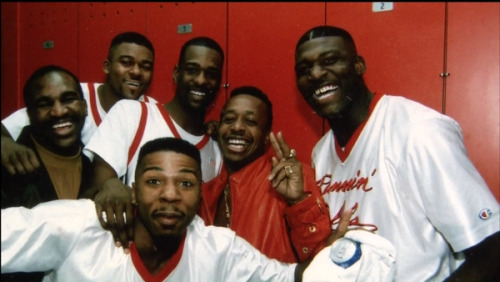
Runnin' Rebels of UNLV


Before The Fab Five, there was The Runnin’ Rebels. Before Chris Webber, Jalen Rose, Juwan Howard, Jimmy King & Ray Jackson there was Larry Johnson, Stacey Augmon, Greg Anthony, Anderson Hunt & George Ackles...

While UNLV coach Lon Kruger has the Thomas & Mack Center rocking again, many Las Vegans recall with fondness the Jerry Tarkanian dynasty, when Runnin’ Rebel games were the hottest tickets in town. Now you can relive that towel-chewing, championship-producing era in an upcoming HBO documentary.
Beginning March 12, on the eve of college basketball’s NCAA Tournament, HBO Sports will air “Runnin’ Rebels of UNLV.” The documentary revisits the period from 1973 to 1992, when the team, and its lightening rod of a coach, embodied the swaggering spirit of Las Vegas.
“The Runnin’ Rebels’ impact on college basketball is indisputable,” said Ross Greenburg, president of HBO Sports. “Their accomplishments on the court made them royalty in Las Vegas, and their glamorous approach made them media stars nationally. … We are going to chronicle their story, providing an in-depth portrait of the main characters who lit up the desert.”
“Runnin’ Rebels of UNLV” examines the larger-than-life personalities of Larry Johnson, Greg Anthony, and Stacey Augmon, as well as the eccentricities of coach Jerry Tarkanian. Using an up-tempo offense and stifling defense, Tarkanian guided the Rebels to four Final Fours. The Runnin’ Rebels won the 1990 NCAA Championship by beating the Duke Blue Devils by 30 points, still largest margin of victory in a championship game.
Billed as one of the greatest college basketball teams of all-time, the 1990-91 Rebels became the first team in 12 seasons to go undefeated during the regular season before losing in the Final Four to archrival Duke in a heartbreaking 79-77 defeat.
The documentary also delves into the controversy surrounding the legendary coach. Tarkanian compiled a 509-105 record at UNLV but was constantly being watched by the NCAA.
Interviews include Tarkanian, and his wife, Lois; former stars Greg Anthony, Reggie Theus, Stacey Augmon, and Armen Gilliam; Duke head coach Mike Krzyzewski; talk show host Jimmy Kimmel; and broadcaster Ross Porter.

Tuesday, March 15, 2011

Thursday, March 10, 2011

The Association: Boston Celtics


Episode 1


Episode 2


Episode 3


Episode 4


On espn:
Episode 5 - Friday, April 15 - 8 p.m. (60 minutes)

BONUS: analyzes Ray Allen`s ability (Sport Science)

Friday, February 25, 2011

More than a game


"More Than A Game" is a documentary that focuses in on 5 young basketball players - LeBron James, Dru Joyce III, Romeo Travis, Sian Cotton, Willie McGee - and their coach, Dru Joyce II, performing on an AAU team with the growing stardom of the future NBA superstar, LeBron James. Taking them through their pre-teens to high school, the film follows their incredible journey as the unknown Ohio team rises to the top of youth athletics. The moral really suggests that to win, a team has to fight until the end to achieve a goal, even if the challenge seems easy.

30 For 30 - No Crossover : The Trial of Allen Iverson


On Valentine’s Day 1993, 17-year-old Bethel High School basketball star Allen Iverson was bowling in Hampton, Va., with five high school friends. It was supposed to be an ordinary evening, but it became a night that defined Iverson’s young life. A quarrel soon erupted into a brawl pitting Iverson’s young black friends against a group of white patrons. The fallout from the fight and the handling of the subsequent trial landed the teenager—considered by some the nation’s best high school athlete—in jail and sharply divided the city along racial lines. Oscar nominee Steve James (“Hoop Dreams”) returns to his hometown of Hampton, where he once played basketball, to take a personal look at this still-disputed incident and examine its impact on Iverson and the shared community.


Thursday, February 24, 2011

30 For 30 - Without Bias


More than two decades after his tragic cocaine overdose, the late Len Bias still leaves more questions than answers. When Bias dropped dead two days after the 1986 NBA Draft, he forever altered our perception of casual drug use and became the tipping point of America's drug crisis in the mid-80's. Future generations continue to face the harsh punishment of drug policies that were influenced by the public outcry after his heartbreaking death. Instead of becoming an NBA star, he became a one-man deterrent, the athlete who reminded everyone just how dangerous drug use can be. Amazingly, questions still linger about his death nearly a quarter-century later. How good could he have been in the pro ranks? Has he become underrated or overrated as the years pass? How could a University of Maryland superstar and Boston Celtics lottery pick be derailed by a cocaine binge? Was Bias a one-time user as we were led to believe, or was there a pattern of recreational use that led to his fatal last night? Did he fall in with the wrong crowd? In the most ambitious, comprehensive and uncompromising account of Bias’ life and death ever captured on film, up-and-coming director Kirk Fraser utilizes dozens of interviews with Bias’ closest teammates, friends and family in an effort to determine exactly what happened on that fateful night. Maybe it wasn't as much of a fluke as we thought.

Wednesday, February 23, 2011

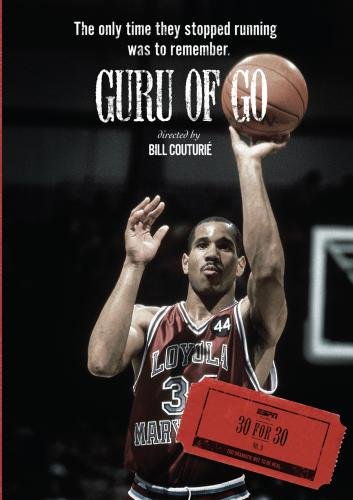
30 For 30 - Guru Of Go


Storyline
By the mid-1980s Paul Westhead had worn out his welcome in the NBA. The best offer he could find came from an obscure small college with little history of basketball. In the same city where he had won an NBA championship with Magic and Kareem, Westhead was determined to perfect his non-stop run-and-gun offensive system at Loyola Marymount. His shoot-first offense appeared doomed to fail until Hank Gathers and Bo Kimble, two talented players from Westhead's hometown of Philadelphia, arrived gift-wrapped at his doorstep. With Gathers and Kimble leading a record scoring charge, Westhead's system suddenly dazzled the world of college basketball and turned conventional thinking on its head. But then, early in the 1989-90 season, Gathers collapsed during a game and was diagnosed with an abnormal heartbeat. Determined to play, Gathers returned three games later, but less than three months later, he tragically died on the court.

Saturday, February 19, 2011

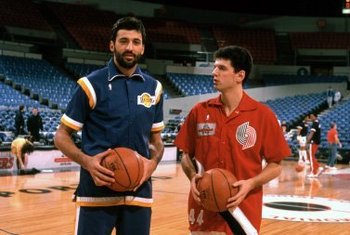
30 For 30 - Once Brother


Drazen Petrovic and Vlade Divac were two friends who grew up together sharing the common bond of basketball. Together, they lifted the Yugoslavian National team to unimaginable heights. After conquering Europe, they both went to America where they became the first two foreign players to attain NBA stardom. But with the fall of the Soviet Union on Christmas Day 1991, Yugoslavia split up. A war broke out between Petrovic's Croatia and Divac's Serbia. Long buried ethnic tensions surfaced. And these two men, once brothers, were now on opposite sides of a deadly civil war. As Petrovic and Divac continued to face each other on the basketball courts of the NBA, no words passed between the two. Then, on the fateful night of June 7, 1993, Drazen Petrovic was killed in an auto accident. "Once Brothers" will tell the gripping tale of these two men, how circumstances beyond their control tore apart their friendship, and whether Divac has ever come to terms with the death of a friend before they had a chance to reconcile.


Ajouter une légende


Sunday, October 18, 2009

Where Supersonics Happens...


Sonicsgate SD Full Version from sonicsgate on Vimeo.


The Seattle SuperSonics (also commonly referred to as the Sonics) were an American professional basketball team based in Seattle, Washington that played in the Pacific and Northwest Divisions of the National Basketball Association (NBA) from 1967 until 2008. Following the 2007–08 season, the team relocated to Oklahoma City, and now plays as the Oklahoma City Thunder. The SuperSonics nickname, logo, and color scheme will be made available to any subsequent NBA team in Seattle.[1] According to the team's Oklahoma-based owners, the Sonics' franchise history will be "shared" between the Thunder and any future Seattle club.[2]
The SuperSonics won the NBA Championship in 1979, and are one of just two teams out of the six major-league men's professional sports franchises that have existed in Seattle (the Sonics, Mariners, Pilots, Seahawks, Sounders, and Metropolitans, winners of the 1917 Stanley Cup) to have won a championship.
Sam Schulman owned the team from its 1967 inception until 1983. It was also owned by Barry Ackerley (1983–2001), and the Basketball Club of Seattle, headed by Starbucks chairman Howard Schultz (2001–2006). In 2006, the SuperSonics were purchased by Oklahoma City businessman Clay Bennett. After failing to find public funding to construct a new arena in the Seattle area, the SuperSonics moved to Oklahoma City before the 2008–09 season, following a $45 million settlement with the city of Seattle to pay off the team's existing lease at KeyArena in advance of its 2010 expiration.